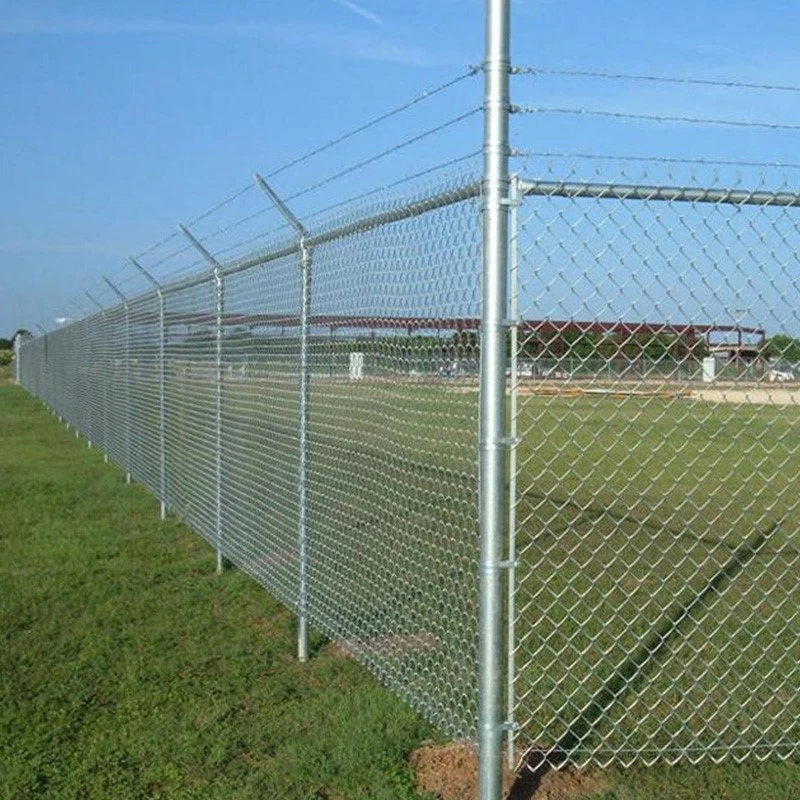
As an infrastructure that combines security protection, space definition, and functional guidance, the construction quality of fences directly affects their safety, durability, and overall aesthetics. To ensure fences function as intended in different scenarios, it is essential to strictly adhere to unified construction standards, forming a closed-loop control system from foundation preparation to acceptance and delivery.
Preparatory work before construction must be comprehensive and meticulous. A site survey should be conducted based on the design drawings to verify the topography, underground pipeline distribution, and surrounding environmental conditions, avoiding construction risks caused by insufficient surveying. A construction plan should be developed based on the survey results, clearly defining material specifications, work procedures, personnel allocation, and safety measures. Technical and safety briefings should be provided to all personnel involved in the construction to ensure they are familiar with the standards and operational points. Materials should be sampled and inspected before arrival on site to confirm that the material, dimensions, and anti-corrosion layer thickness meet design requirements, preventing substandard products from entering the site.
Foundation construction is fundamental to fence stability. The post foundations should be accurately laid out according to the design position, ensuring that the axis and elevation errors are controlled within the allowable range. For different geological conditions, appropriate excavation and backfilling methods should be adopted. Compaction or reinforcement mesh should be added when necessary to improve load-bearing capacity and anti-overturning ability. The foundation depth and dimensions must meet the structural stress calculation requirements. Concrete pouring should be continuous, vibrated to ensure compaction, and the superstructure can only be installed after the specified curing period to prevent damage from early load-bearing.
The main structure installation must emphasize precision and stability. The verticality, spacing, and straightness of the columns should conform to specifications and be checked throughout the process using measuring instruments. When connecting components using welding, bolts, or clamps, the design torque or welding process standards should be followed. Welds should be full and crack-free, and bolts should be tightened securely and treated to prevent loosening. Corrosion protection and coating operations should be carried out under suitable environmental conditions to avoid moisture or dust pollution affecting adhesion. After completion, the uniformity and integrity of the coating should be checked.
Safety and environmental protection measures must be implemented during construction. Warning signs and isolation facilities should be set up in the work area, and qualified protective equipment must be provided for work at heights or near edges. Waste generated during construction should be collected, categorized, and disposed of in compliance with regulations to reduce the impact of dust and noise on the surrounding environment.
Completion acceptance should cover structural safety, appearance quality, and functional performance. The stability of the foundation, the reliability of component connections, the integrity of the anti-corrosion layer, and the overall linear straightness should be checked. For smart fences, the effectiveness of the sensing system and communication functions should also be verified. After acceptance, a complete record should be created and archived to provide a basis for future operation and maintenance.
Fence construction standards are based on standardization and meticulousness. Only through strict adherence to each stage can project quality and safety be ensured, realizing the long-term value of fences in protection and management.